

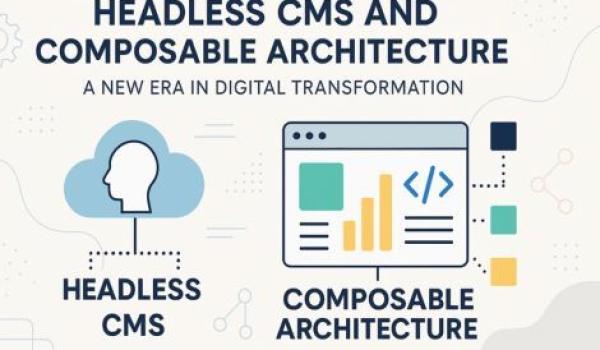
Headless CMS and Composable Architecture: A New Era in Digital Transformation
As the digital landscape grows more complex, the need for scalable, agile, and future-ready content solutions is pressing. In a recent webinar hosted by Executive Leaders Network in partnership with Storyblok, industry leaders explored how organisations are rethinking their approach to content management using headless CMS platforms and composable digital architecture.
Speakers:
- Ronald Nieuwenhuis, Team Lead, Iquality
- Sebastian Gierlinger, VP of Engineering, Storyblok
- Peter Dorrington, Host/Moderator, Executive Leaders Network
Rethinking the Role of Content in a Personalised Digital World
Legacy content management systems (CMS) were not built for the demands of modern marketing and digital operations. Today’s consumers expect personalised, omnichannel experiences delivered in real time. Traditional CMS solutions, with their monolithic architecture and rigid workflows, hinder flexibility and innovation.
This webinar explored how headless CMS technology, particularly when paired with a composable architecture, enables businesses to be more agile. A headless CMS separates content from presentation, allowing teams to deliver consistent content across web, mobile, digital signage and more, all from a single back end.
Why Composable Architecture is Now Essential
Composable architecture offers a best-of-breed approach where individual services like CMS, DAM, authentication and search can be selected and integrated via APIs. Unlike traditional suites, this model allows companies to adopt only what they need, scale at their own pace and remain future-proof.
This shift reflects broader digital transformation priorities. As business environments become more complex and customer expectations more specific, enterprises require platforms that are modular, scalable and responsive to change. Composable systems support this agility without locking organisations into vendor-specific ecosystems.
Addressing the Pain Points of Legacy CMS
Several issues emerged as key drivers for change:
- Inefficient content organisation: Legacy systems often lead to fragmented and poorly structured content, requiring manual workarounds.
- Limited personalisation: Customisation features are usually baked in and difficult to adapt without major development effort.
- High operational costs: Maintaining large, outdated systems is resource-heavy and limits innovation.
- Integration challenges: Traditional CMS platforms make it difficult to connect new tools or leverage modern capabilities like AI or personalisation engines.
- Developer and editor frustration: Rigid workflows and technology lock-in slow progress and lead to sub-optimal user experiences.
These limitations are magnified for global enterprises, where regional teams need autonomy and scale, yet require central oversight and consistent brand presentation.
Practical Steps for Digital Transformation
The transition to headless and composable systems isn’t a “rip and replace” initiative. Leaders in the webinar emphasised a strategic, step-by-step approach:
- Start with a high-impact area: Rather than overhauling everything, begin with a key business unit or customer-facing touchpoint.
- Build a strong foundation: Define clear design principles, document personas and customer journeys, and implement a design system to ensure consistency.
- Invest in content architecture: The way content is structured impacts everything from editing efficiency to personalisation capabilities. Treat content modelling as a critical capability.
- Prioritise integration and governance: With multiple tools from different vendors, strong governance, access control and API management are essential.
- Build for flexibility: The architecture should support easy updates, the addition of new tools and seamless content delivery across multiple channels.
Real-World Outcomes: Increased Efficiency and Engagement
A case study presented during the webinar illustrated how composable architecture can drive significant outcomes:
- Improved editor productivity through intuitive interfaces and autonomous workflows
- Reduced hosting and operational costs by decoupling front-end and back-end systems
- Faster time-to-market for digital initiatives due to agile development practices
- Enhanced performance metrics including site speed, engagement and lead generation
- Better utilisation of data for personalisation and customer experience improvement
Evaluating a CMS: What to Consider
Choosing the right CMS is no longer about checking feature boxes. Instead, businesses must evaluate based on both present needs and future requirements:
- Security and compliance: Ensure certifications are in place
- API-first approach: Enables integration and extensibility
- Performance and scalability: Must withstand spikes in demand
- Editor empowerment: Non-technical users must be able to manage content easily
- Structured content for SEO and AI-readiness: Enables optimisation for both traditional search and generative AI discovery
- Future use-case support: Ensure the system supports your long-term vision, not just immediate goals
Q&A: Key Questions from the Webinar
Q: What are the main advantages of headless CMS over traditional systems?
A: Headless CMS offers greater flexibility, omnichannel publishing and reduced vendor lock-in through API-based architecture.
Q: How should a company begin a CMS transformation?
A: Start with one high-impact area, develop content architecture, and align systems around a composable, modular approach.
Q: What technical capabilities should be prioritised in CMS selection?
A: Security, API-first design, scalability, structured content, and editor usability are critical.
Q: How do you manage multiple tools in a composable stack?
A: Use integration layers, governance policies and ensure all systems adhere to shared principles like MACH (Microservices, API-first, Cloud-native, Headless).
Q: Why is content modelling so important?
A: It dictates how content is created, managed and reused. Poor modelling leads to inefficiencies and hinders scalability.
Watch the Full Webinar
To watch the full event on demand, visit the official replay page: Webinar | Headless Playbook for IT Leaders
#HeadlessCMS #ComposableArchitecture #DigitalTransformation #EnterpriseContent #APIFirst #MACHprinciples #DXP #ContentStrategy #CMSMigration #PersonalisedContent #OmnichannelDelivery #Storyblok #WebPerformance #CustomerExperience
Recent Articles
Tailored Data Solutions
Information experts Tailored Data Solutions are urgently…